Explain why probabilistic outputs are safer than one-number claims.
Grade Prediction Vs Confidence Range
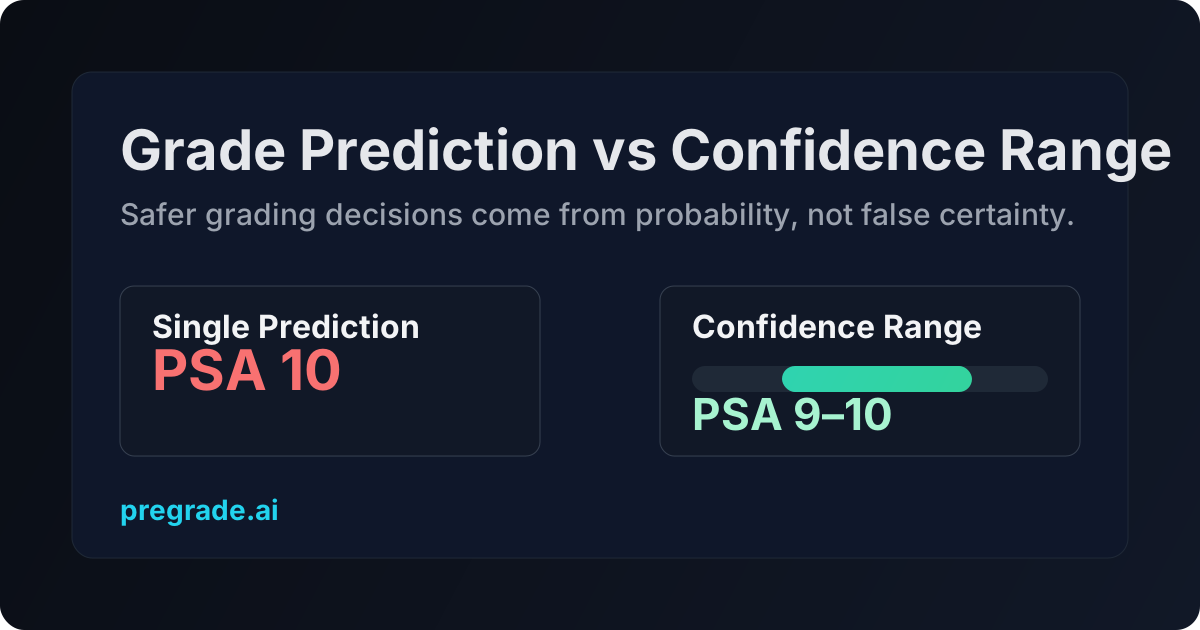
A single-number grade prediction feels simple, but it can hide uncertainty that matters for real submission decisions. Confidence ranges make risk visible by showing a likely band of outcomes instead of pretending every card has one guaranteed result.
Why one-number predictions can mislead
- False certainty: A single value (like “PSA 10”) implies precision that the photo quality and defect ambiguity often cannot support.
- Hidden downside: Users can overlook near-likely lower outcomes that may erase expected profit after fees and shipping.
- Overconfident submissions: Teams may push borderline cards into grading queues instead of routing them to review or hold.
What a confidence range adds
A confidence range communicates both the center estimate and uncertainty width. For example, “PSA 9–10, medium confidence” is more operationally useful than “PSA 10” because it supports risk-adjusted choices.
In practical terms, ranges help you decide whether to submit now, capture better photos, or hold the card until your expected value clears a safer threshold.
A simple decision workflow
- Start with baseline card value. Understand best-case and median outcomes before fees.
- Use confidence range output. Treat wider ranges as higher risk.
- Apply a minimum edge threshold. Submit only when expected upside remains strong under conservative outcomes.
- Escalate low-confidence cards. Route ambiguous cases for manual review instead of auto-submitting.
FAQ
Are single-grade predictions always bad?
Not always. They can be useful as a quick summary, but they should be paired with uncertainty signals before making money decisions.
How wide is too wide for a confidence range?
It depends on your margin. If the lower bound outcome breaks your break-even target, treat the card as hold/review rather than submit.
Can I reduce uncertainty?
Yes. Better lighting, sharper photos, and consistent capture SOPs typically improve signal quality and tighten ranges.
Take action
Use confidence ranges to protect grading budget and avoid overconfident submissions. Make decisions that hold up even when outcomes are less than perfect.